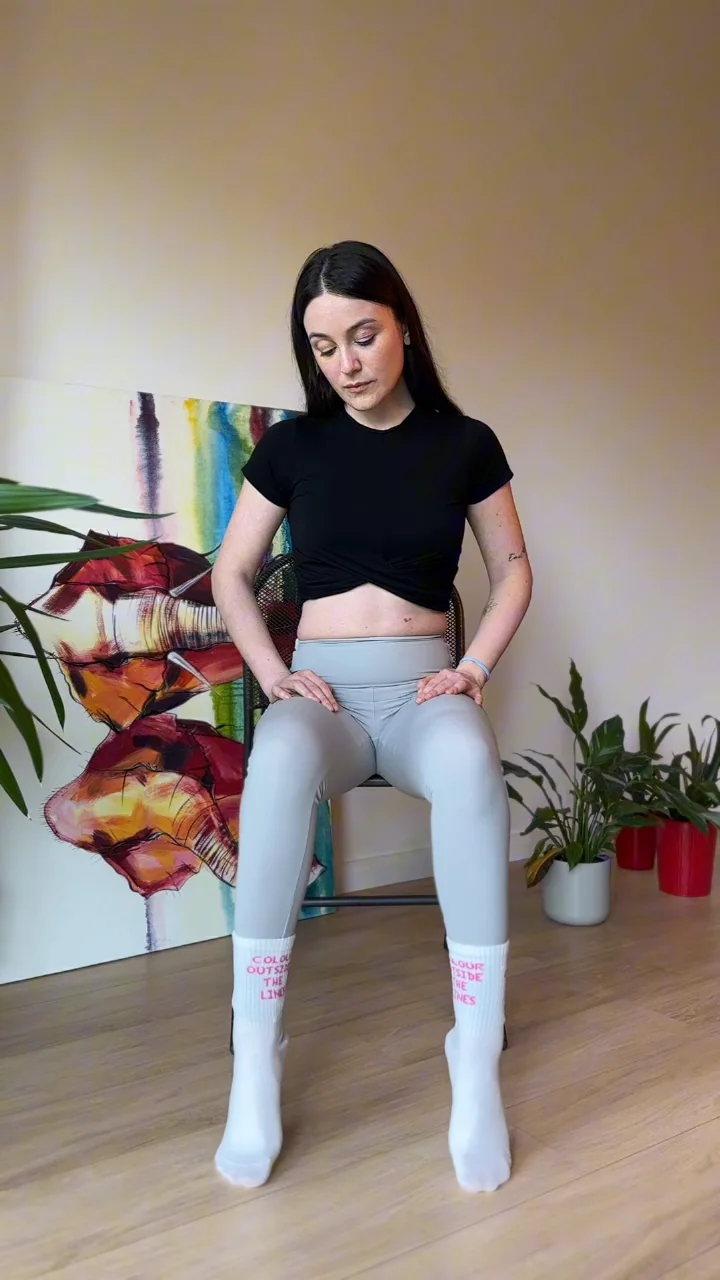
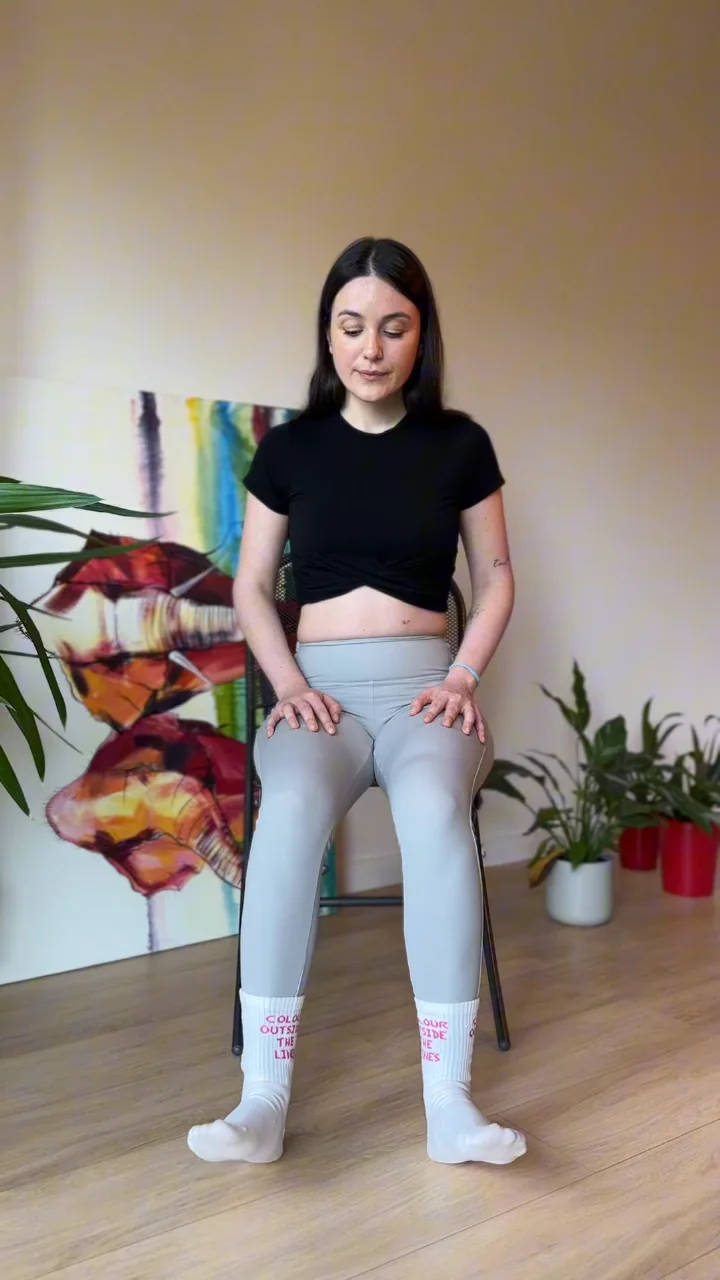
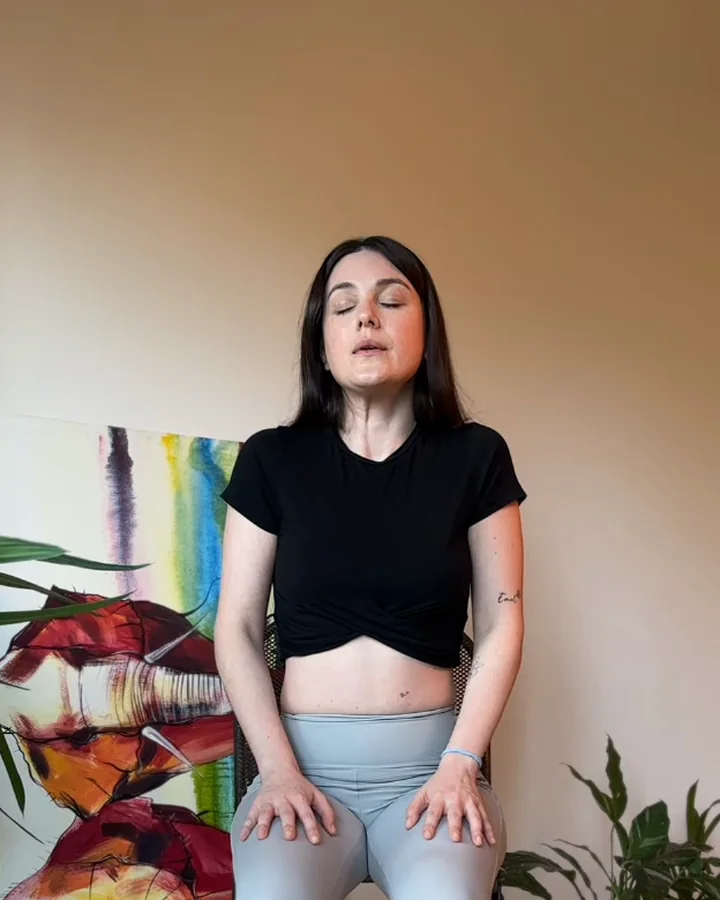
These 12 chair exercises work your arms, shoulders, back, core and legs without standing up. Do moves
1, 2, 3, 5, 7, 9, 11 and 4 in that order, at the reps shown, and you have a 10-minute routine. Do it
3 to 5 days a week, and check with your doctor first if you have a heart, joint or balance condition.
You do not need a gym, a mat or the ability to get down on the floor. A sturdy chair and 10 minutes
are enough to keep your legs strong for stairs, your shoulders free for reaching, and your back moving
when you turn. Every move below is shown by the coach from the ChairFIT app, with plain steps, how many
reps to do, and an easier and a harder option.
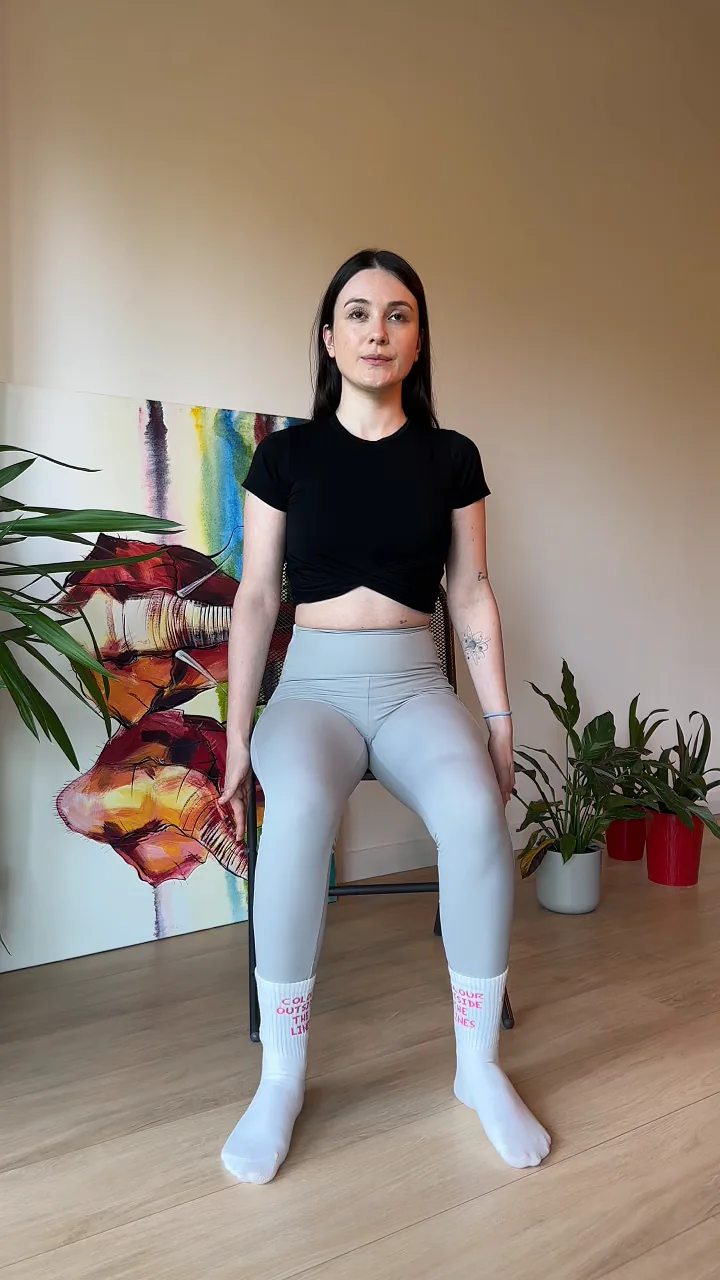
Chair: solid, no wheels, ideally no arms. Sit so your feet are flat and your knees are bent at about a right angle (this is the NHS setup too).
Position: sit toward the front half of the seat with your back tall. Hold the sides of the seat for any leg move.
Clothes: loose and comfortable. Flat shoes with grip, or bare feet on a non-slip floor.
Water: keep a glass within reach.
Pace: slow and controlled beats fast. Breathe out on the effort, never hold your breath.
Warm-up
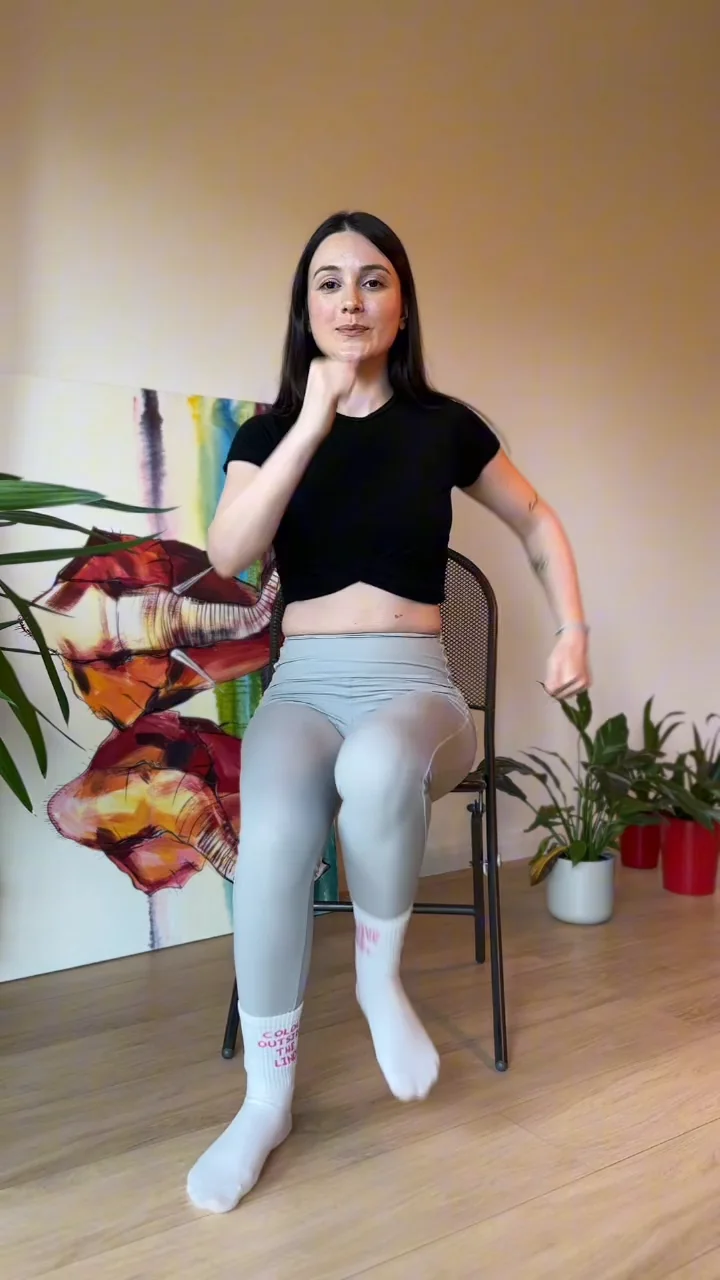
1Seated march
In the ChairFIT app: Marching
45 seconds, easy pace
The warm-up. It gets blood moving to your legs and raises your heart rate gently.
Sit tall toward the front half of the chair, feet flat and hip-width apart.
Lift your right knee a few inches, then place the foot down softly.
Lift your left knee. Keep alternating like you are marching in place.
Swing your arms in rhythm, elbows bent, and breathe normally.
Easier: Lift only your heels and keep your toes on the floor, or hold the sides of the seat.
Harder: Lift your knees higher and march faster for 60 seconds.
Upper body
These five moves work the shoulders, chest and arms. Rest 15 to 20 seconds between them if you need to.
2Forward arm raise
In the ChairFIT app: Front Raise
10 slow reps
Works the front of the shoulders, the muscles you use to lift a kettle or reach a cupboard.
Sit tall with your arms resting by your sides, palms facing in.
Keeping your arms long, raise them in front of you up to shoulder height.
If your shoulders feel good, keep going until your hands point up and slightly forward.
Lower slowly while you count to three.
Easier: Stop at shoulder height, or raise one arm at a time.
Harder: Hold a small water bottle in each hand and pause for two seconds at the top.
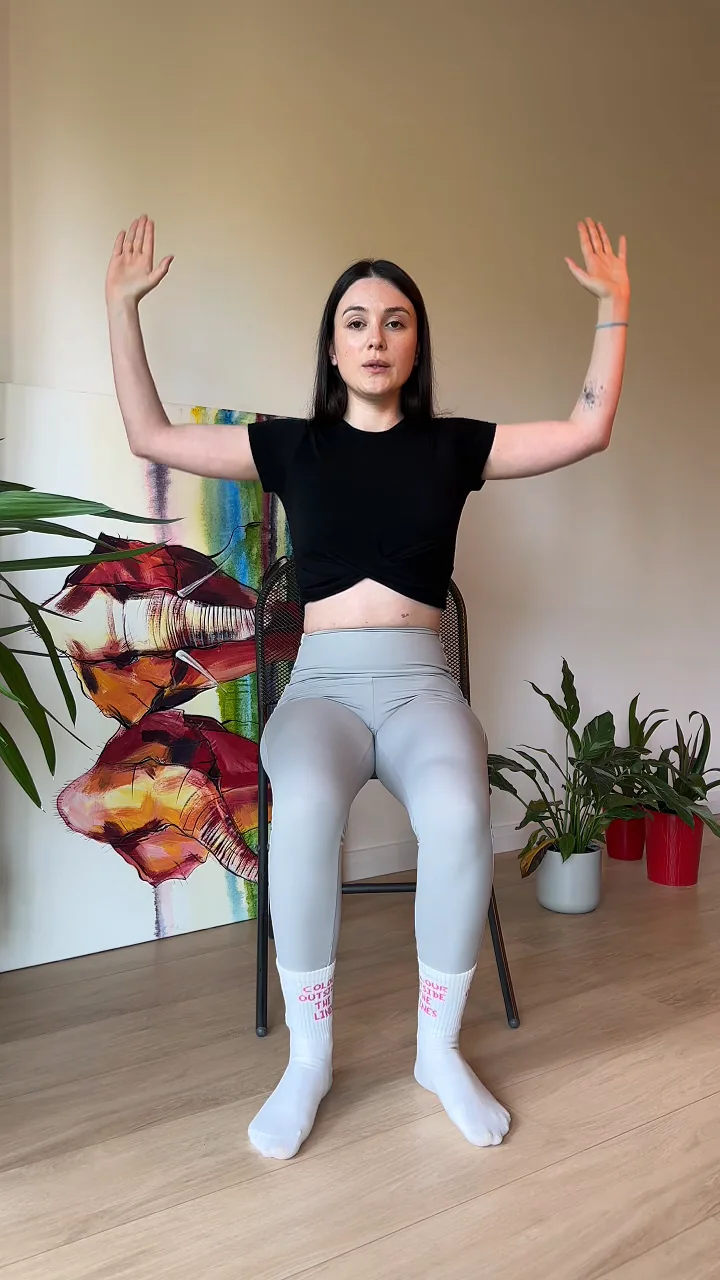
3Seated shoulder press
In the ChairFIT app: Shoulder Press
10 reps
Builds strength for anything overhead, from putting away dishes to pulling on a sweater.
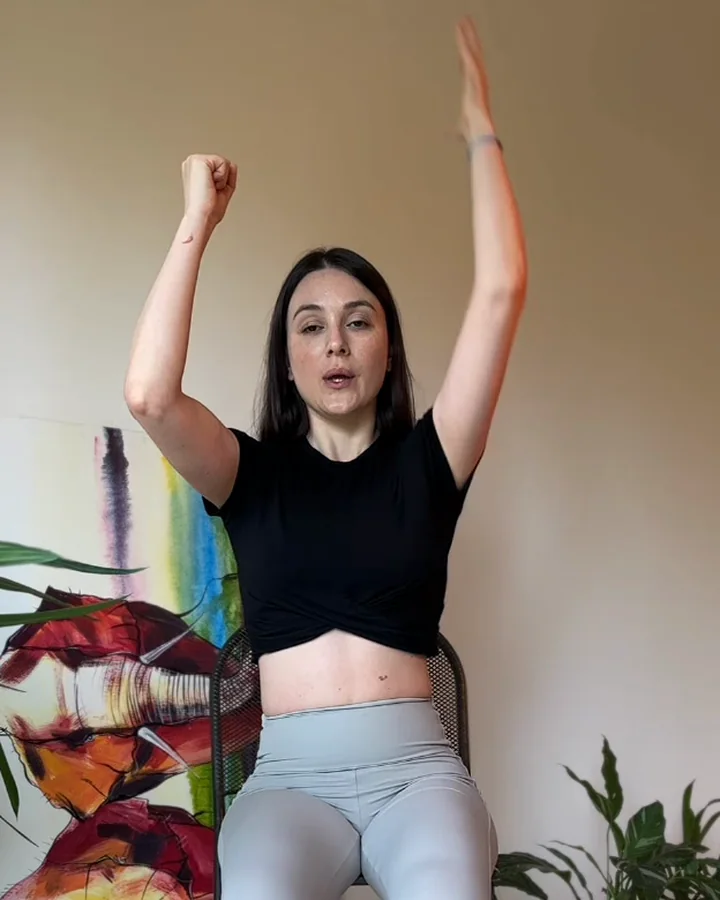
Bring your hands up beside your shoulders, elbows bent and pointing out, like goal posts.
Press both hands up until your arms are almost straight above your head.
Lower back to the goal-post position with control.
Keep your back against the chair and your ribs down; do not arch.
Easier: Press one arm at a time, or only go halfway up.
Harder: Hold water bottles or light hand weights, and take three seconds to lower.
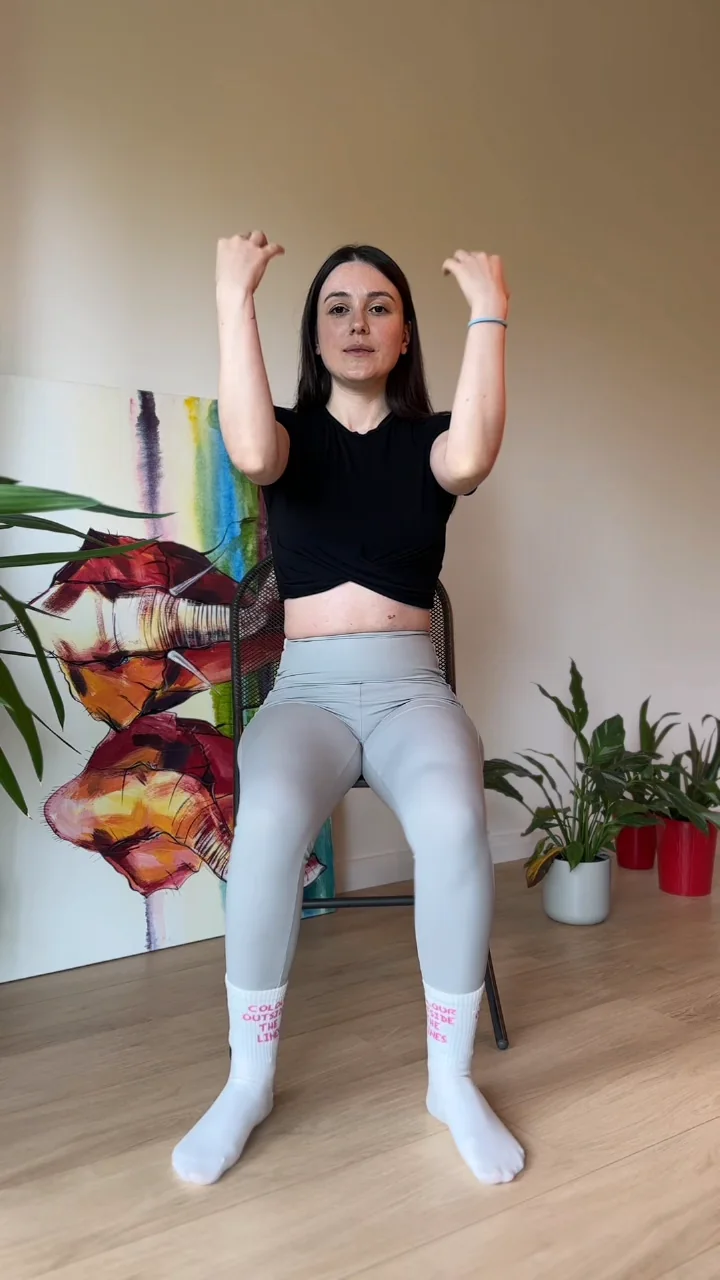
4Forward biceps curl
In the ChairFIT app: Biceps Forward
12 reps
Strengthens the front of the upper arms for carrying shopping bags and getting out of a chair with your arms.
Reach both arms out in front of you at shoulder height, palms facing up.
Bend your elbows and bring your fists toward your shoulders.
Straighten your arms back out in front of you.
Keep your upper arms level the whole time.
Easier: Keep your elbows down by your sides and curl from there, which is lighter on the shoulders.
Harder: Hold a filled water bottle or a can in each hand.
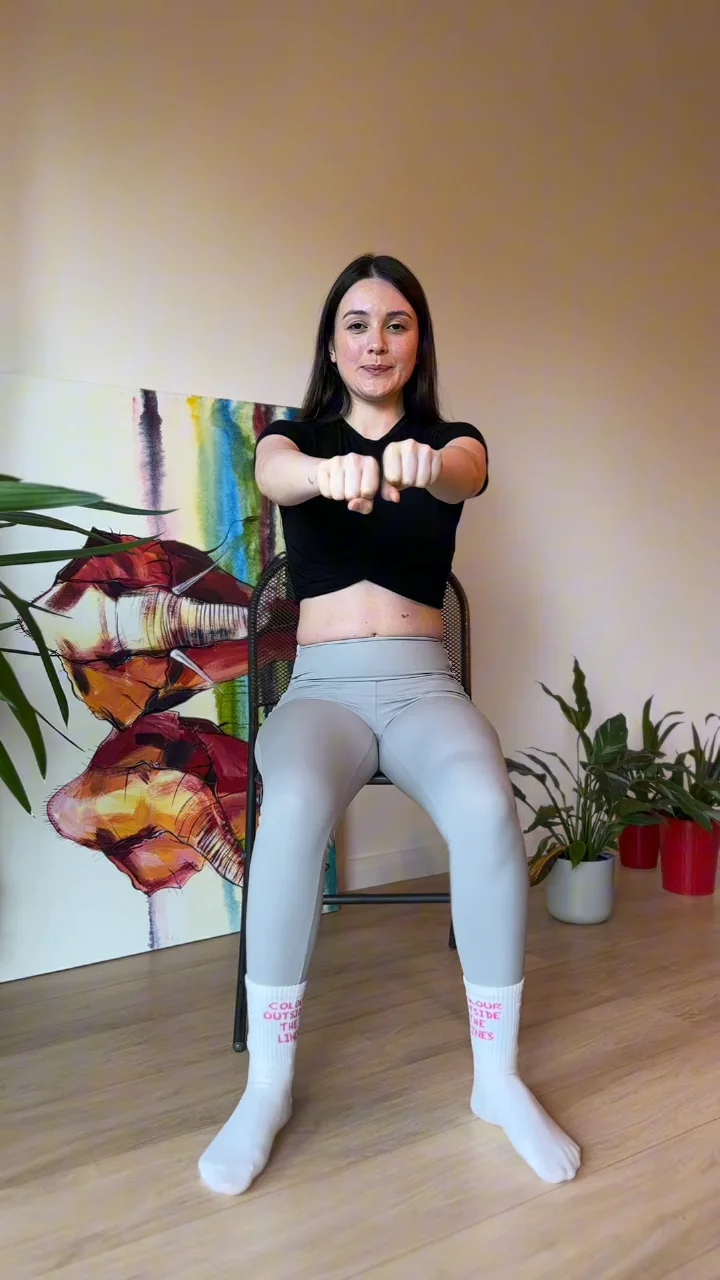
5Seated chest press
In the ChairFIT app: Chest Press
12 reps
Works the chest, shoulders and the backs of the arms, the pushing muscles you use to rise from a chair.
Make two loose fists and hold them in front of your chest, elbows out to the sides.
Push both fists straight forward until your arms are long.
Pull them back to your chest and gently squeeze your shoulder blades together.
Breathe out as you push, in as you pull back.
Easier: Move slowly and push only halfway.
Harder: Press your palms together hard as you push, or pause for two seconds with arms straight.
6Seated punches
In the ChairFIT app: Punches
30 seconds
A little cardio for the upper body. It warms you up and works the shoulders and core.
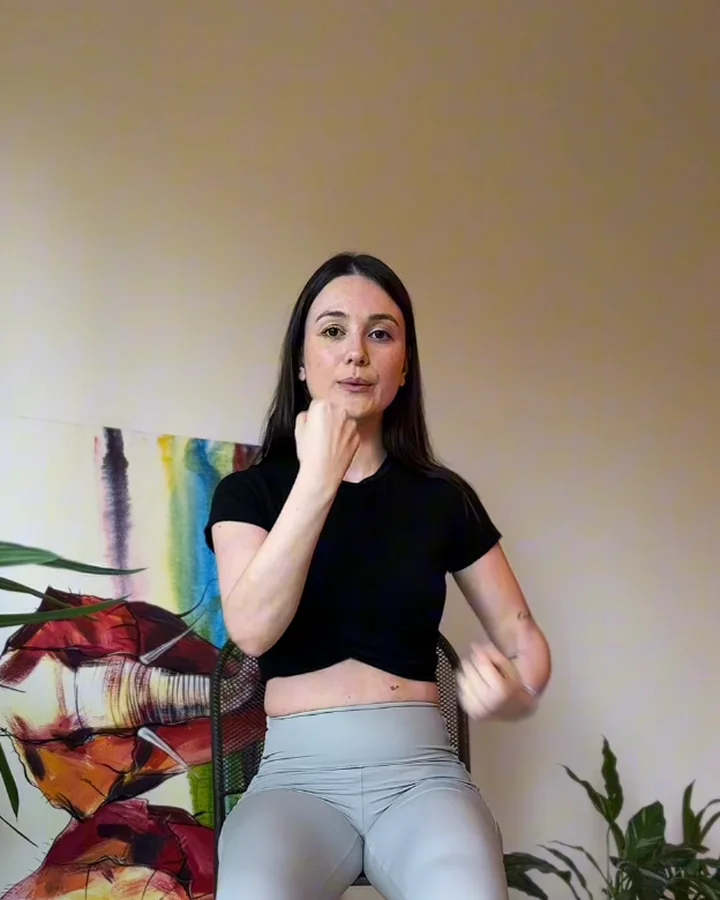
Sit tall with your fists up by your chin, elbows bent.
Punch your right fist forward at chest height, then pull it back.
Punch with your left. Keep alternating at a steady pace.
Keep your shoulders relaxed and do not lock your elbows.
Easier: Punch slowly, or rest your fists on your lap between every few punches.
Harder: Go faster for 45 seconds, or punch slightly upward.
Core and back
Your core is the band of muscle around your middle that keeps you upright in the chair. These two moves
work it gently by turning and bending, never by straining forward.
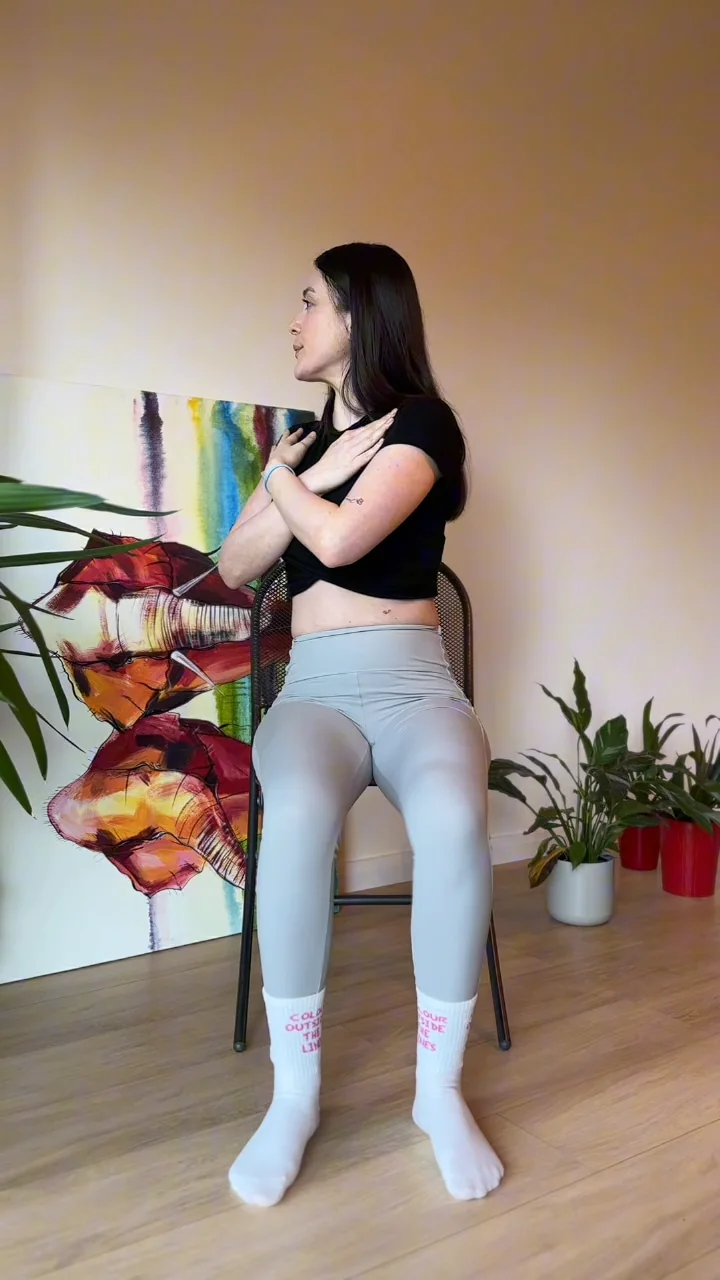
7Seated torso twist
In the ChairFIT app: Torso Twists Alternative
5 twists each side
Keeps the middle of your back moving, which helps when you turn to look behind you.
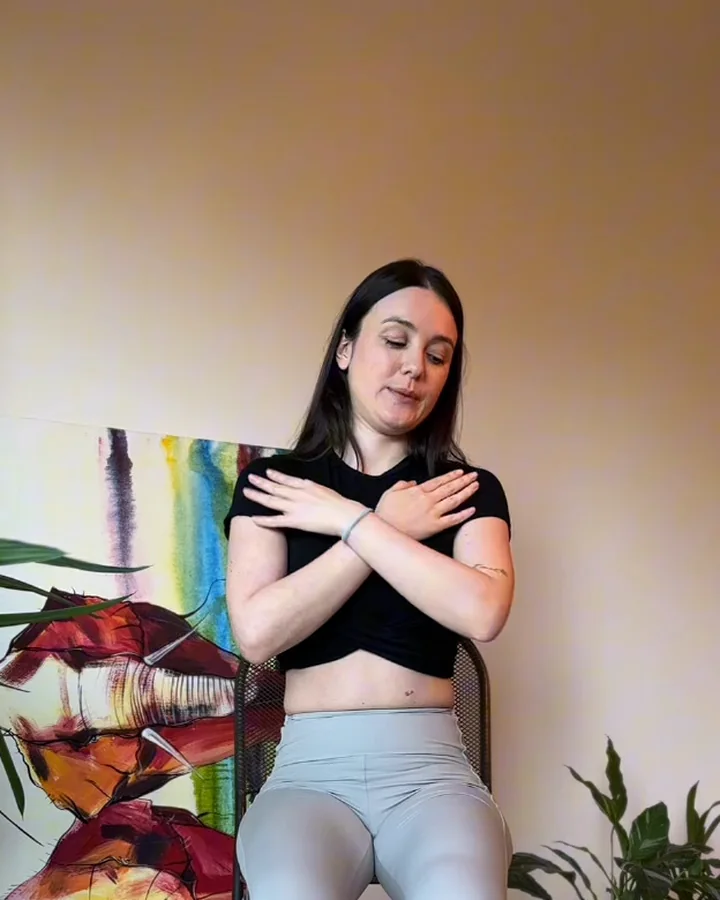
Cross your arms over your chest with your hands on the opposite shoulders.
Keep your hips and knees facing forward.
Breathe out and turn your upper body to the right as far as is comfortable.
Come back to the centre, then turn to the left.
Easier: Make the turn smaller and go slowly.
Harder: Hold each turn for 5 seconds and sit taller as you turn.
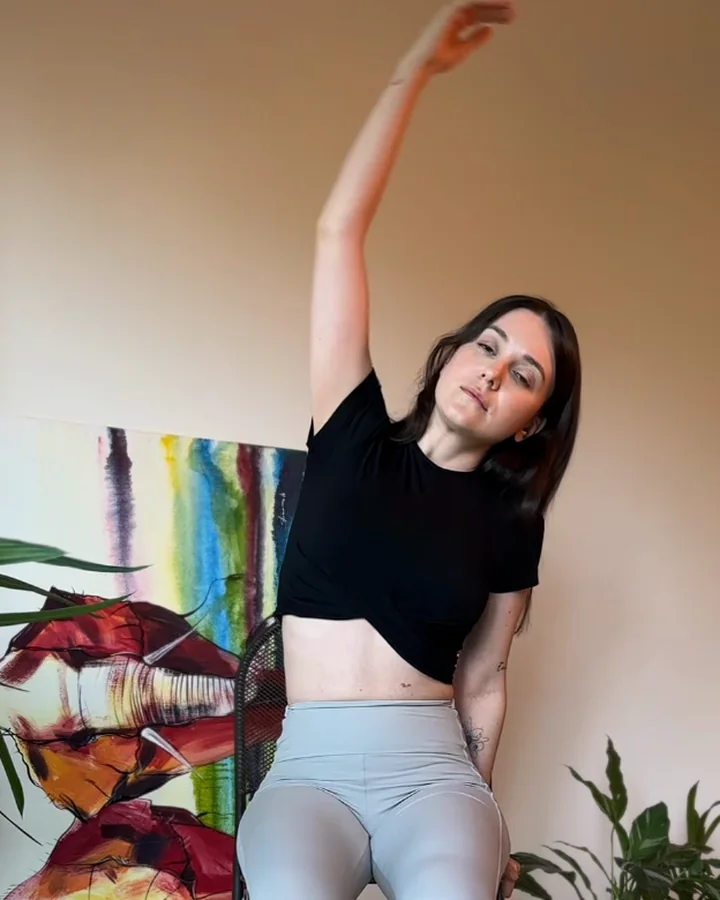
8Seated side bend
In the ChairFIT app: Side Bends
8 bends each side
Works the muscles along your sides that help you stay upright and reach sideways.
Sit tall with your arms hanging down by your sides.
Lean gently to the right, letting your right hand slide toward the floor.
Use the muscles on your left side to bring yourself back up to straight.
Repeat to the left. Keep both hips on the seat.
Easier: Keep the lean small and hold the seat with the other hand.
Harder: Hold your hands behind your head, elbows wide, as you bend.
Legs and feet
Strong thighs and calves make standing up, climbing stairs and walking easier. Hold the sides of the seat
for all four of these.
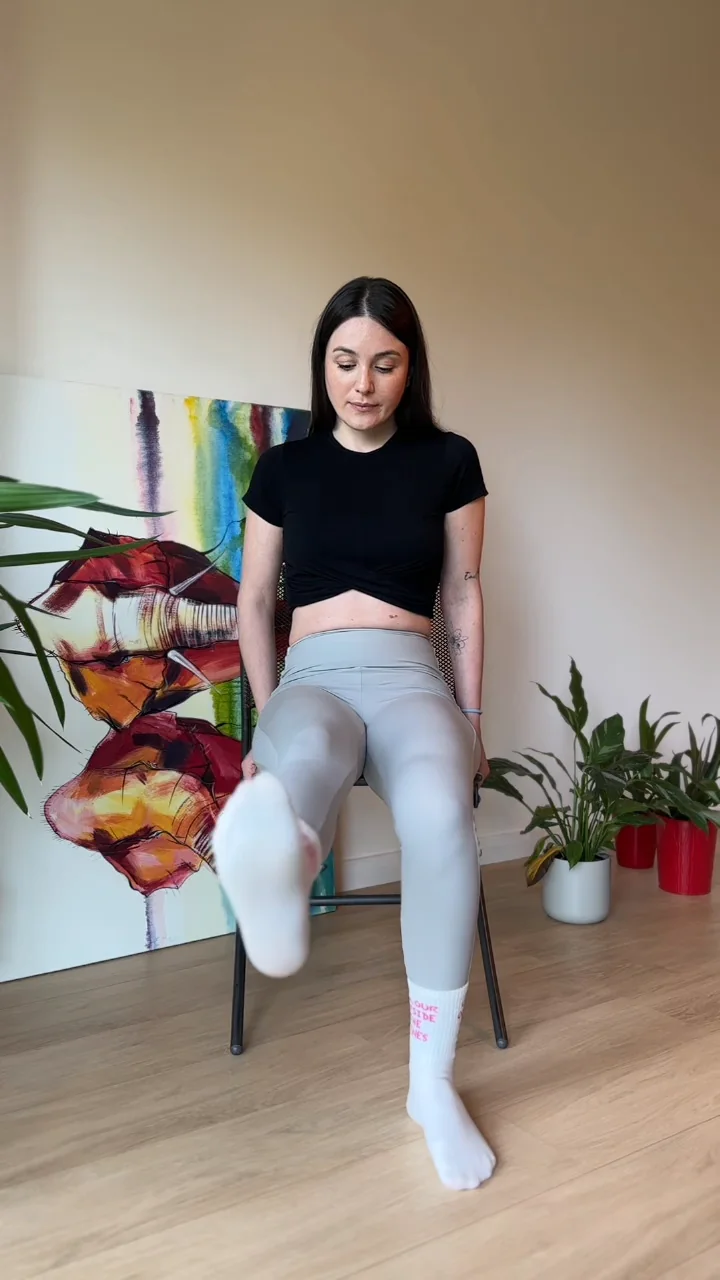
9Seated leg extension
In the ChairFIT app: Leg Extension
10 reps each leg
Strengthens the front of the thigh, the muscle that does most of the work when you stand up or climb stairs.
Sit tall and hold the sides of the seat.
Straighten your right knee so your foot lifts off the floor.
Pull your toes back toward you and hold for a second.
Lower the foot slowly. Do all reps, then switch legs.
Easier: Lift the foot only a few inches.
Harder: Hold the straight leg for three seconds each rep.
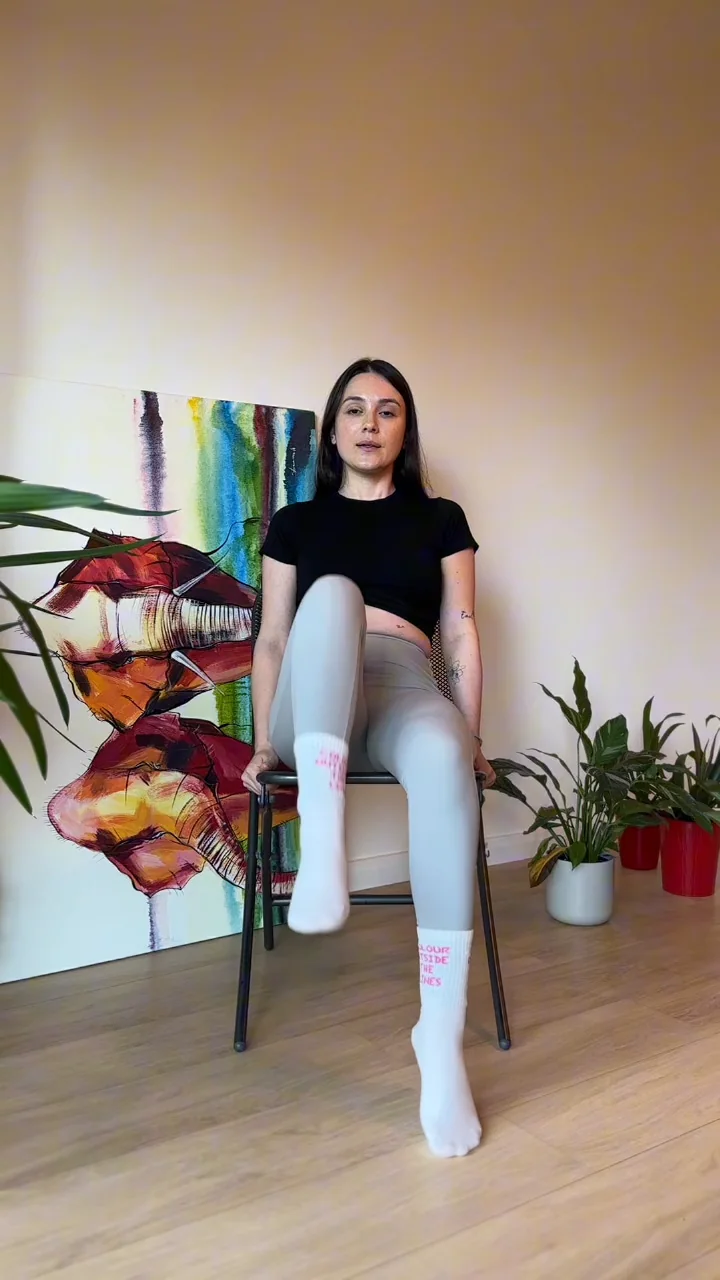
10Seated knee lift
In the ChairFIT app: Knee Lift
8 reps each leg
Works the hip flexors and lower belly, which you use to lift your feet over a step or a curb.
Sit a little back in the chair and hold the sides of the seat.
Bend your right knee and lift it up toward your chest as high as is comfortable.
Lower the foot slowly to the floor.
Do all reps on one side, then switch.
Easier: Lift the knee only a few inches.
Harder: Hold the top for two seconds without leaning back.
11Seated calf raise
In the ChairFIT app: Calf Raises
15 reps
Works the calves, which help with walking and keeping your balance.
Sit with your feet flat on the floor and your hands resting on your thighs.
Press through the balls of your feet and lift both heels as high as you can.
Lower your heels slowly.
Keep your toes on the floor the whole time.
Easier: Lift one heel at a time.
Harder: Press down on your knees with your hands to add resistance.
12Seated toe raise
In the ChairFIT app: Toe Raises
15 reps
Works the muscles at the front of the shin that lift your toes so they clear the ground when you walk.
Sit with your feet flat and your heels on the floor.
Lift your toes and the front of your feet up toward your shins.
Lower them back down slowly.
Keep your heels planted.
Easier: Lift one foot at a time.
Harder: Slide your feet a little further forward so the movement gets bigger.
The free 10-minute routine
Here is a balanced 10-minute session built from the moves above. Rest about 15 seconds between moves.
It is the same sequence as our printable chair exercise sheet.
On days you want something calmer, swap the routine for the
chair yoga routine. Mixing the two through the week
covers strength and flexibility.
For a different mix in the same 10 minutes, try our
full-body chair workout. It adds a sky reach to the warm-up and
ends with a hip stretch.
How often to do chair exercises
The CDC recommends that adults 65 and older get at least 150 minutes of moderate-intensity activity a
week, do muscle-strengthening activities on at least 2 days a week, and do activities that improve
balance. The NHS gives similar advice: activities that improve strength, balance and flexibility on at
least 2 days a week, and breaking up long periods of sitting.
A practical way to use this page:
Weeks 1 and 2: the 10-minute routine 3 days a week, using the easier options where needed.
Weeks 3 and 4: 4 or 5 days a week. Add 2 reps per move, or swap in moves 6, 8, 10 and 12.
After a month: do two rounds, or try the harder options on the moves that feel easy.
Chair exercises are a good, safe starting point for many people, but they are not everything.
Here is what they can and cannot do:
They build strength and mobility. Done regularly, seated strength moves count toward the muscle-strengthening part of the guidelines.
They are not a full balance program. Balance improves most when you practise it standing, with support nearby. If falls worry you, ask your doctor or a physiotherapist about a balance program.
They are not a treatment. They will not cure arthritis, back pain or any other condition.
Check with your doctor before starting if you have a heart or lung condition, high blood pressure that is not under control, osteoporosis, recent surgery (especially hip or knee replacement), or you take medicine that makes you dizzy.
Stop and get help if you feel chest pain or tightness, dizziness, sudden shortness of breath, or sharp joint pain. Mild muscle tiredness the next day is normal; pain is not.
Sources
We link only to pages we have read. Guidance can change, so check the latest version.
A good set covers the whole body: a seated march to warm up, arm raises and a shoulder press for the shoulders, a chest press and biceps curl for the arms, a torso twist and side bend for the back and core, and leg extensions, knee lifts and calf raises for the legs. The 12 moves on this page do exactly that.
How long should a senior do chair exercises each day?
About 10 minutes is a realistic start. The routine on this page takes roughly 10 minutes. If that feels easy after two weeks, add a second round or a few reps per move rather than jumping to a long session.
Can chair exercises count toward the weekly activity guidelines?
They can help. The CDC recommends that adults 65 and older do muscle-strengthening activities on at least 2 days a week, plus aerobic activity and balance activities. Seated strength moves count toward the strength part. Brisk seated moves like marching and punches raise your heart rate, but for most people walking or other standing activity is still the main way to reach the aerobic target.
What kind of chair is best for chair exercises?
A solid, stable chair without wheels, where you can sit with your feet flat on the floor and your knees bent at about a right angle. The NHS suggests avoiding chairs with arms because they restrict movement. A dining chair is usually ideal.
Are chair exercises safe if I have arthritis or a heart condition?
Many people with arthritis or heart conditions exercise safely while seated, but the right moves and effort depend on your situation. Check with your doctor or physiotherapist first, start with the easier option of each move, and stop if anything causes sharp pain, chest pain, dizziness or unusual shortness of breath.
ChairFIT is a 30-day seated chair workout program for iPhone. Each day is about 10 minutes of follow-along
video with a voiceover coach, built for seniors and beginners. You only need a sturdy chair.