Chair yoga for seniors is a set of slow, seated stretches done in time with your breath. The 8 poses
below take about 12 minutes: cat-cow, side stretch, sky reach, seated twist, hip opener, figure-4
stretch and forward bend, finished with a few quiet breaths. Move only as far as is comfortable, never
into pain, and check with your doctor first if you have a joint, spine, eye or blood pressure condition.
Chair yoga keeps the parts of yoga that help most people (gentle stretching, a moving spine, slow
breathing) and drops the parts that put many older adults off: the floor, the mat and the balancing.
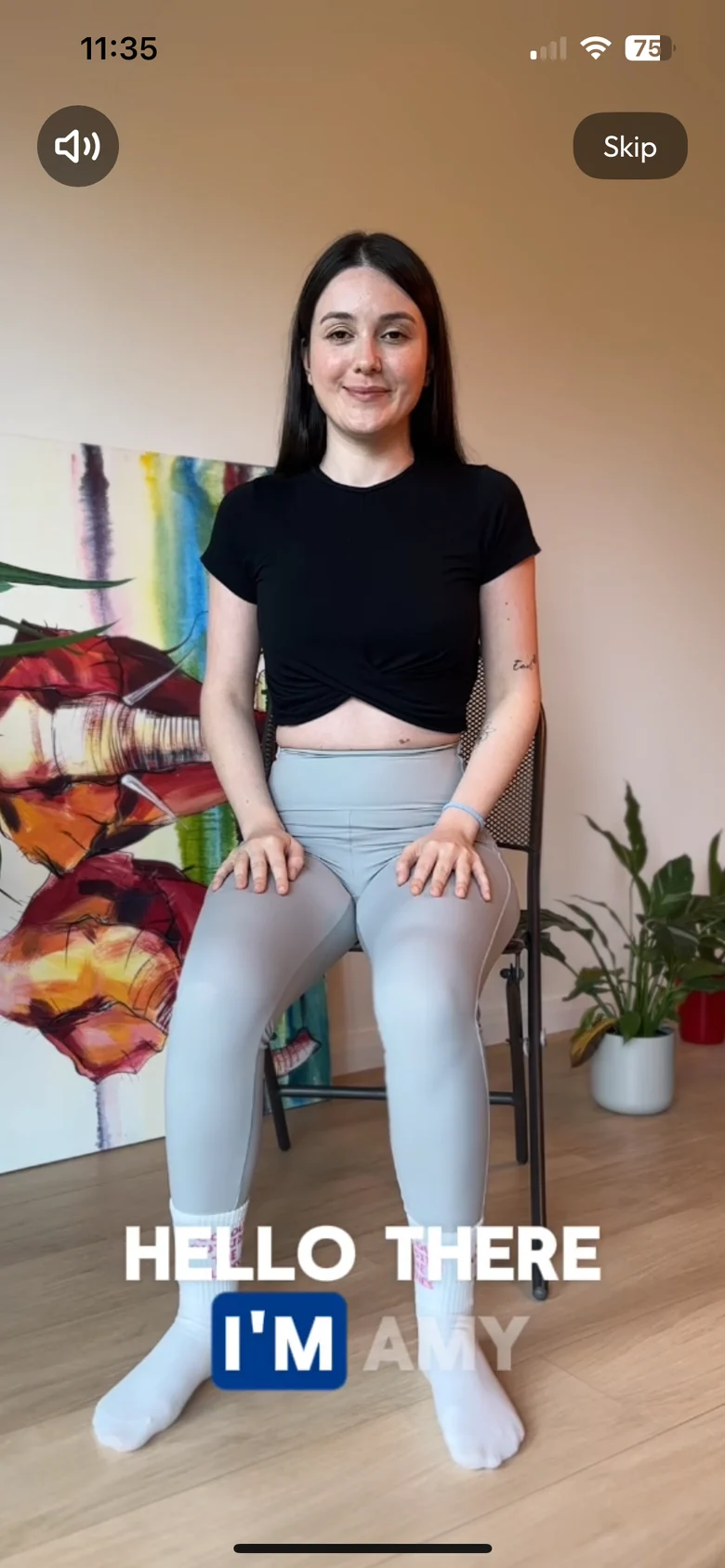
Every pose below is shown by the coach from the ChairFIT app, with breathing cues and an easier and a
harder version.
Chair yoga uses a chair as your base instead of the floor. You sit for every pose, so you never have to
get up and down, and the chair supports your back and hips while you stretch.
It is: slow movement linked with breathing, gentle stretching, and a calm few minutes in your day.
It is not: a cure for any condition, a replacement for medical advice, or a full strength or balance workout on its own.
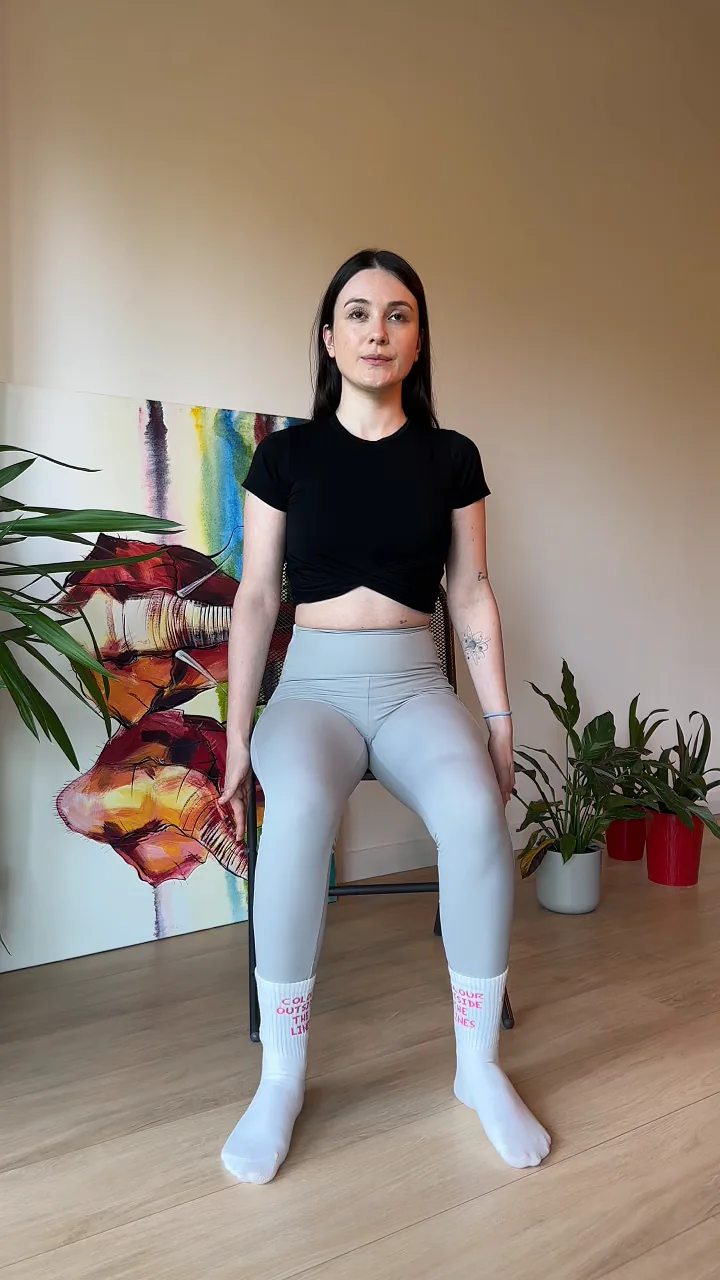
Set up the same way as for any seated exercise: a solid chair without wheels, feet flat on the floor,
knees at about a right angle, and you sitting toward the front half of the seat.
How to breathe during chair yoga
Keep it simple. You do not need any special technique.
Breathe in and out through your nose if that is comfortable. Your mouth is fine too.
Breathe in as you lift, open or lengthen. Breathe out as you fold, twist or lower.
Count slowly to 3 or 4 on each breath in and each breath out.
Never hold your breath. If you lose the rhythm, just start again on the next breath.
Beginners should avoid forceful breathing exercises, which is one of the cautions on the NCCIH yoga safety page.
The 8 poses, step by step
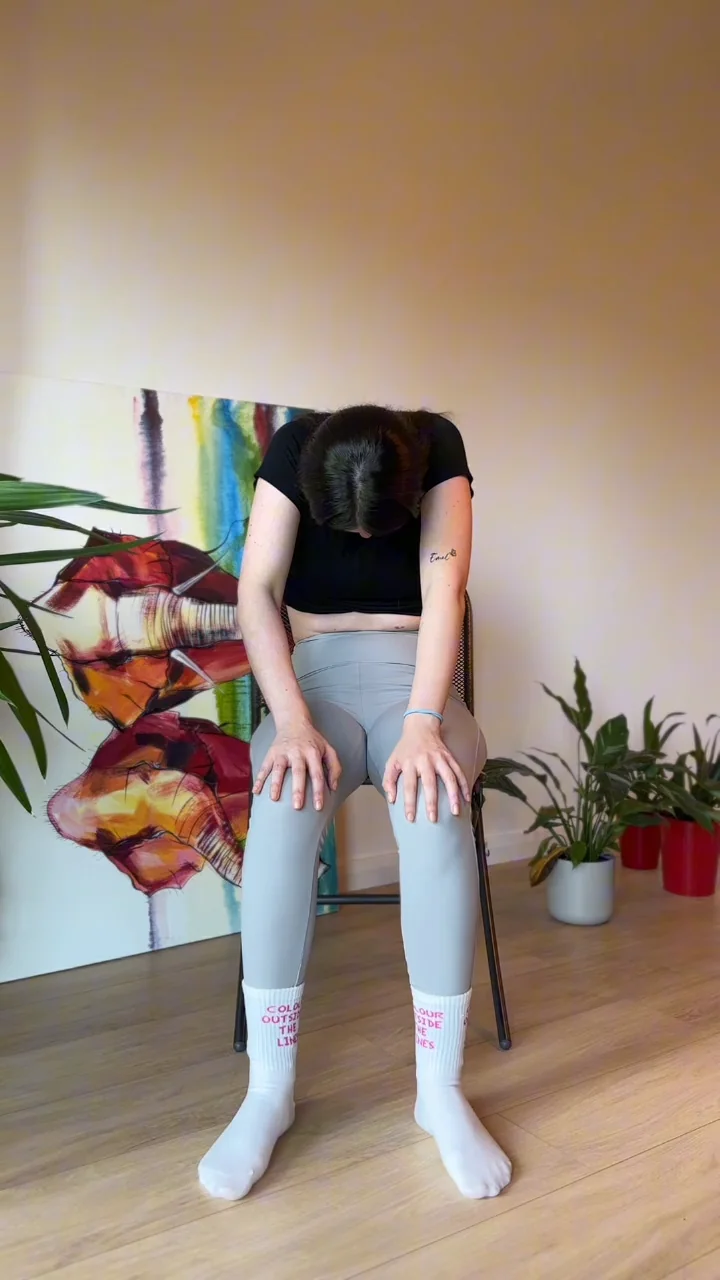
1Seated cat-cow
In the ChairFIT app: Cat Cow
6 slow rounds
Moves your whole spine forward and back, and links the movement with your breath.
Sit toward the front of the chair with your hands on your knees.
Breathe in: lift your chest, draw your shoulders back and look up gently (cow).
Breathe out: round your back, drop your chin toward your chest and let your shoulders come forward (cat).
Move slowly with each breath.
Easier: Keep the movement small and keep your eyes looking forward instead of up.
Harder: Take a full 4 counts in and 4 counts out for each half.
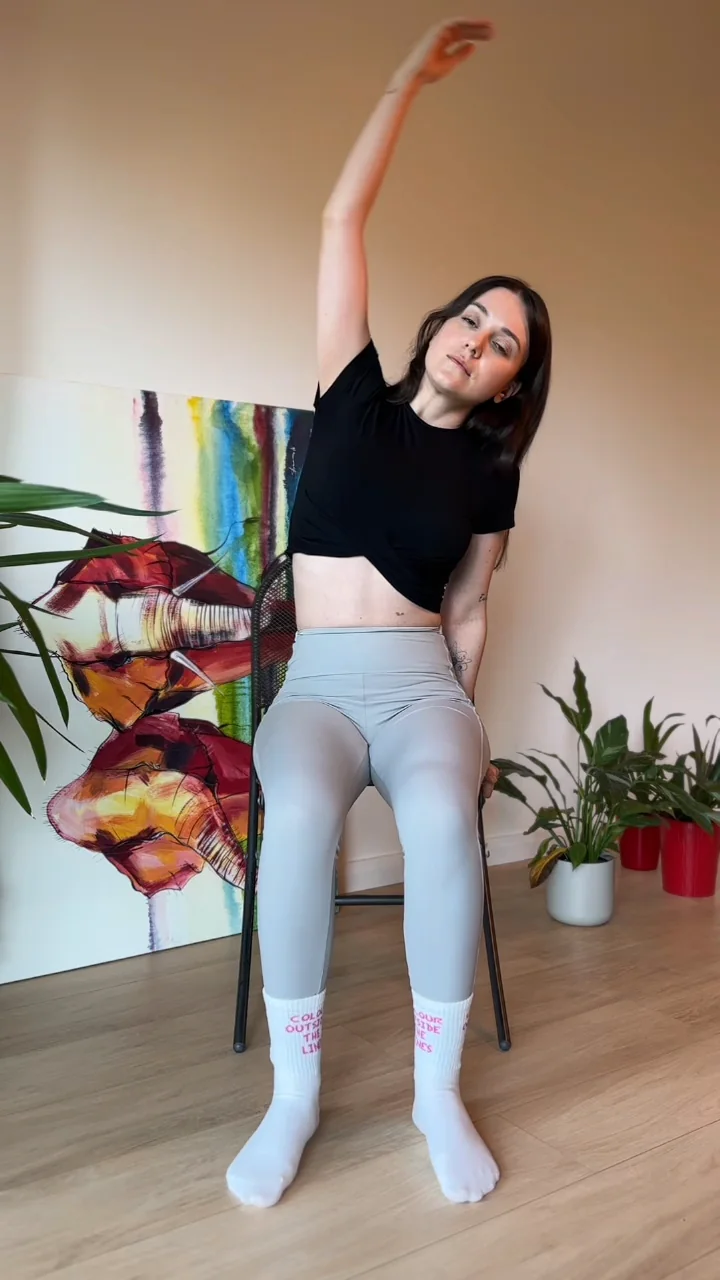
2Seated side stretch
In the ChairFIT app: Side Stretching
Hold 3 breaths each side, 2 rounds
Stretches the sides of your body and the muscles between your ribs, which can make deep breaths feel easier.
Sit tall and rest your left hand on the seat beside you.
Breathe in and reach your right arm up toward the ceiling.
Breathe out and lean to the left, reaching the arm up and over.
Hold for 3 breaths, come back up, then switch sides.
Easier: Keep the reaching hand on your head and lean only a little.
Harder: Reach both arms overhead and hold for 5 breaths.
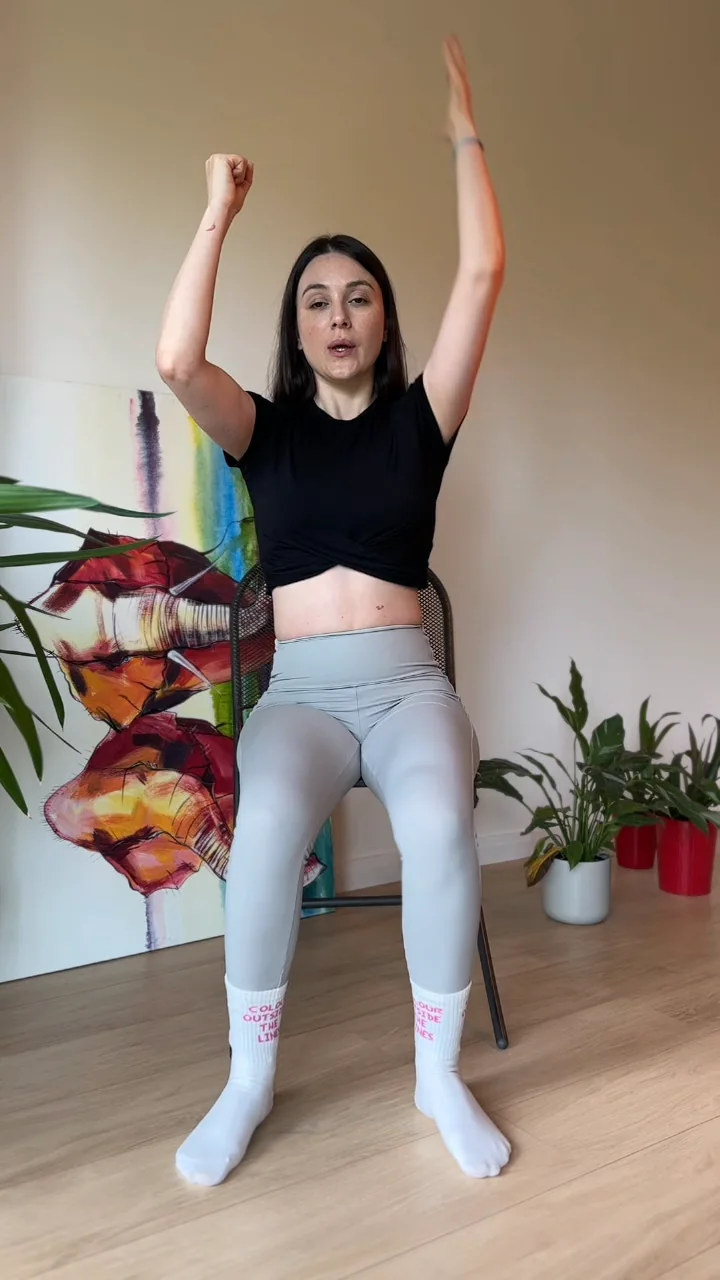
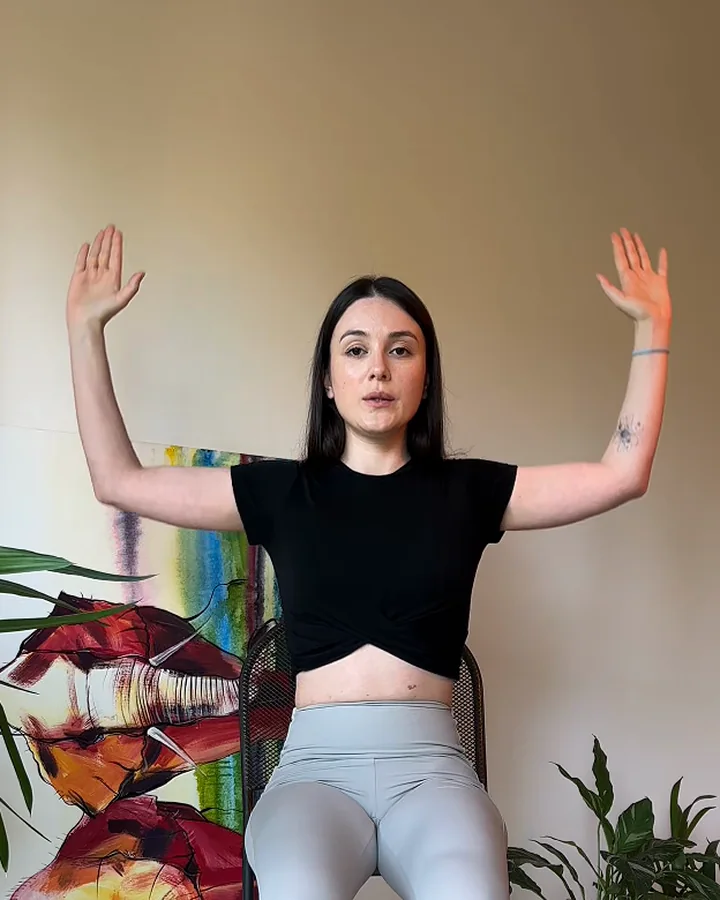
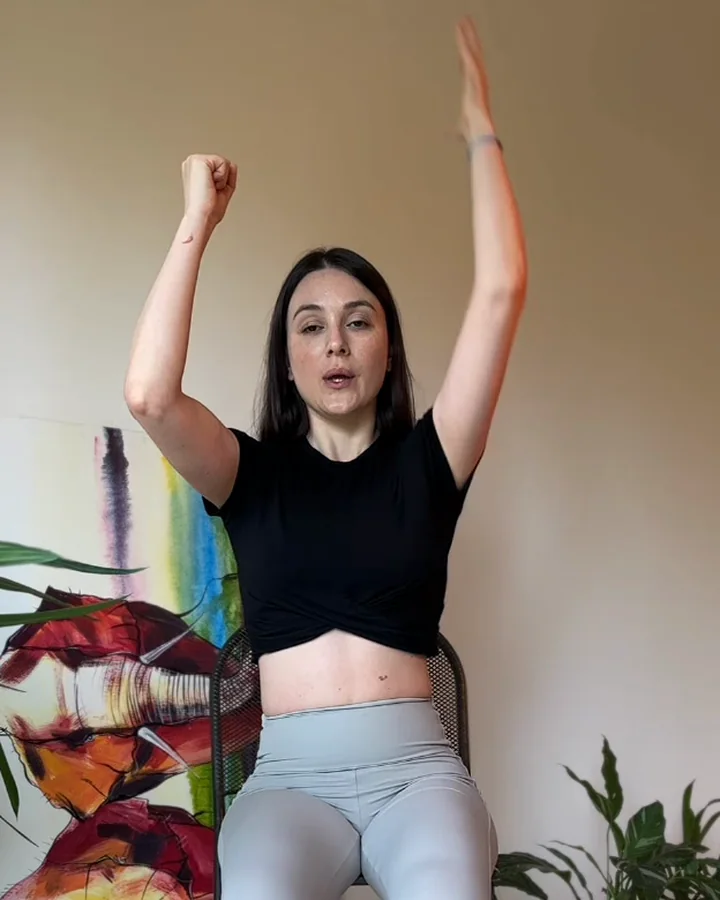
3Sky reach
In the ChairFIT app: Sky Grabbing
30 seconds
An easy way to lengthen the sides of the body and get the shoulders moving.
Sit tall and raise both arms up, elbows soft.
Reach your right hand higher, as if picking an apple from a high branch.
Then reach with your left hand. Keep alternating at a gentle pace.
Let your ribs lift with each reach and keep breathing.
Easier: Reach with one arm at a time and rest the other hand on your lap.
Harder: Reach a little higher and keep going for 45 seconds.
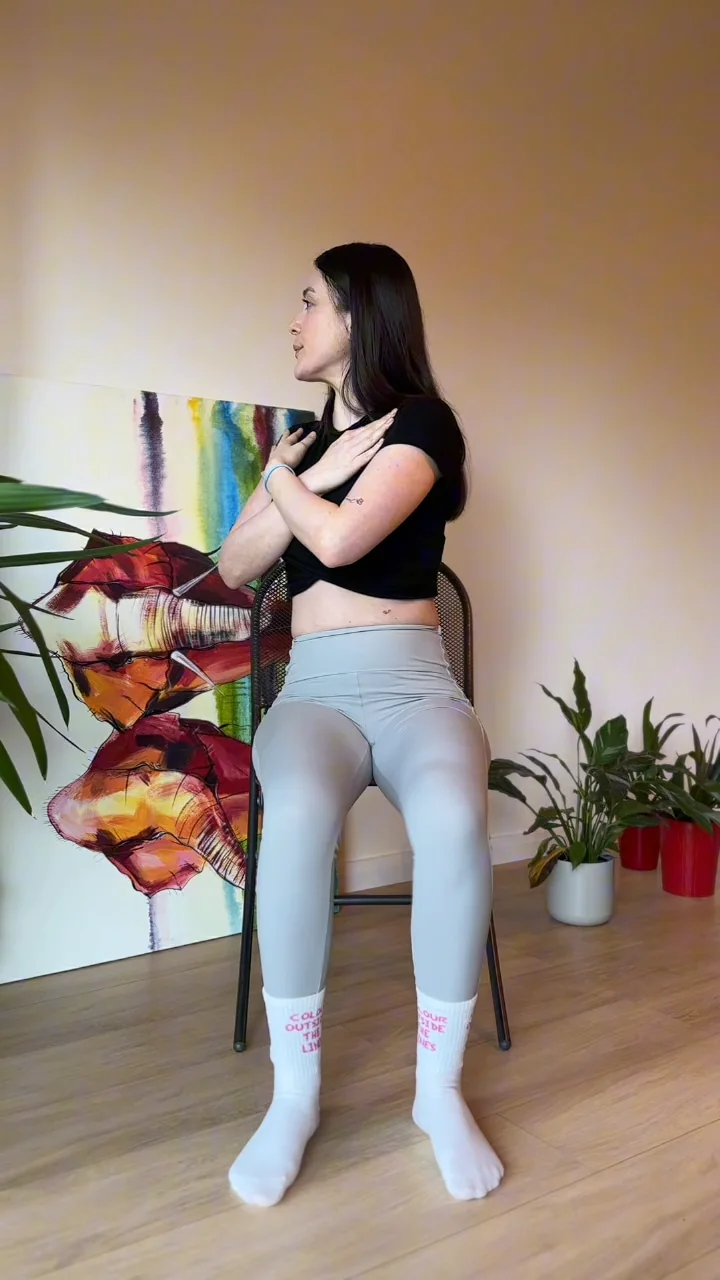
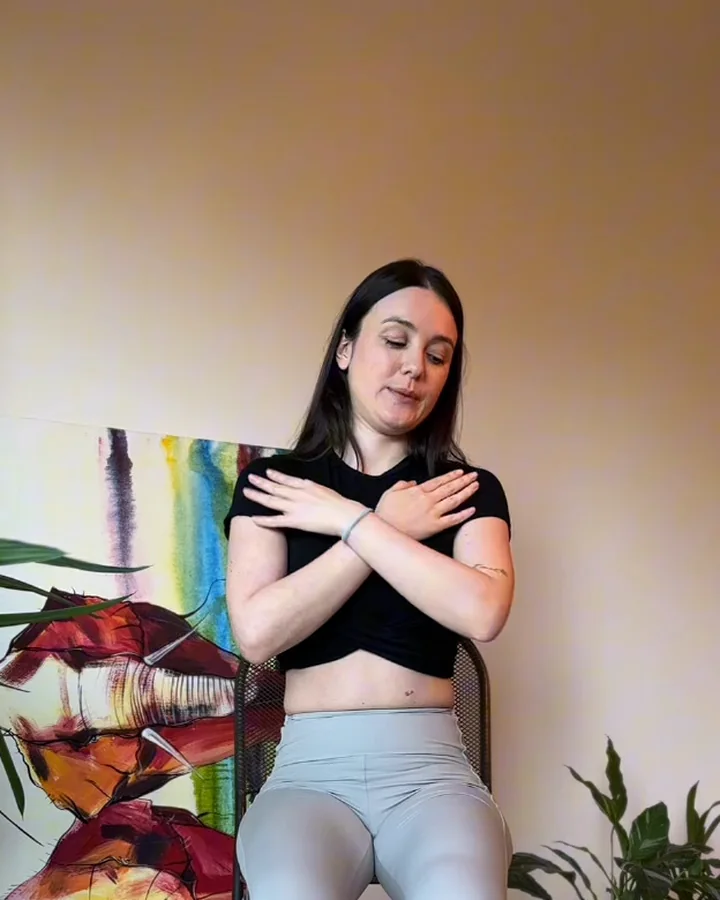
4Seated torso twist
In the ChairFIT app: Torso Twists Alternative
3 slow twists each side, hold each for 2 breaths
Keeps the middle of your back moving, which helps when you turn to look behind you.
Cross your arms over your chest with your hands on the opposite shoulders.
Keep your hips and knees facing forward.
Breathe out and turn your upper body to the right as far as is comfortable.
Come back to the centre, then turn to the left.
In yoga terms this is a gentle seated twist. Breathe in to sit tall, breathe out to turn.
Easier: Make the turn smaller and go slowly.
Harder: Hold each turn for 5 seconds and sit taller as you turn.
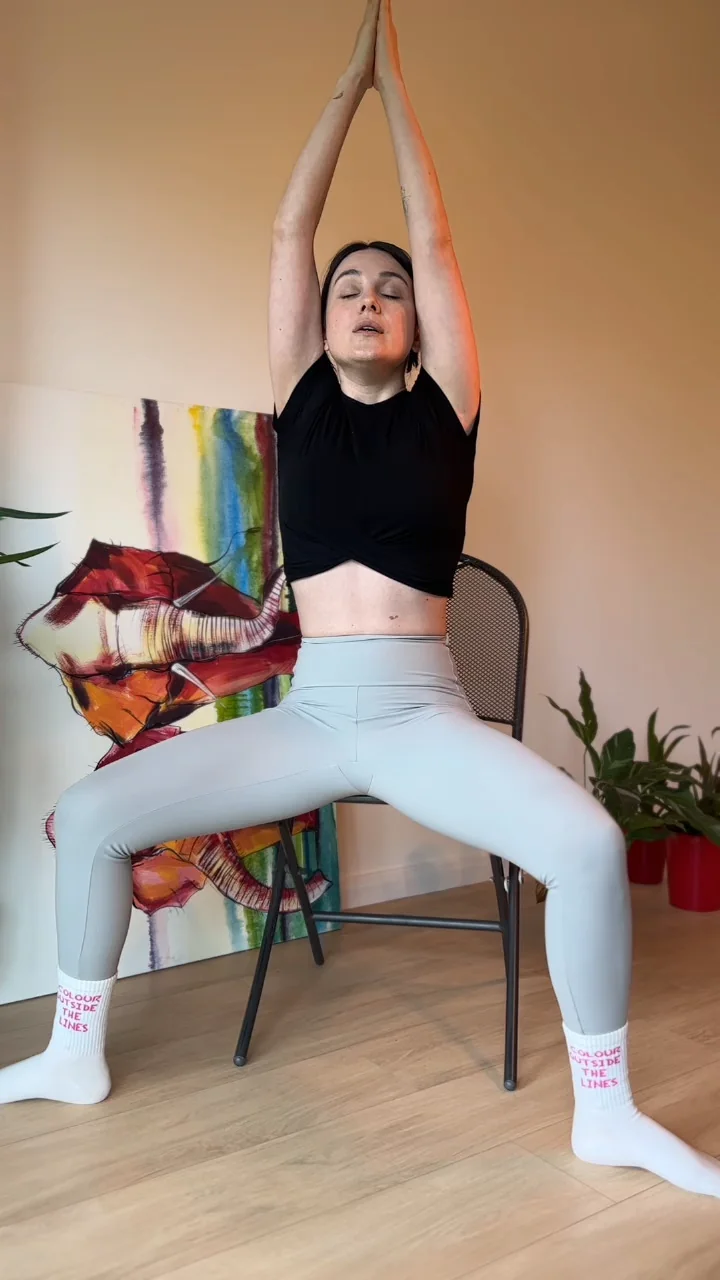
5Seated hip opener
In the ChairFIT app: Hips Opener
Hold 3 to 5 breaths, 3 rounds
Opens the inner thighs and hips and lets you stretch tall through the spine.
Sit toward the front of the chair and set your feet wide, toes turned slightly out.
Bring your palms together at your chest.
Breathe in and raise your joined hands overhead.
Breathe out and open your arms wide to the sides, then bring your palms back to your chest.
Easier: Keep your feet closer together and your hands at your chest.
Harder: Hold the arms overhead for 5 slow breaths each round.
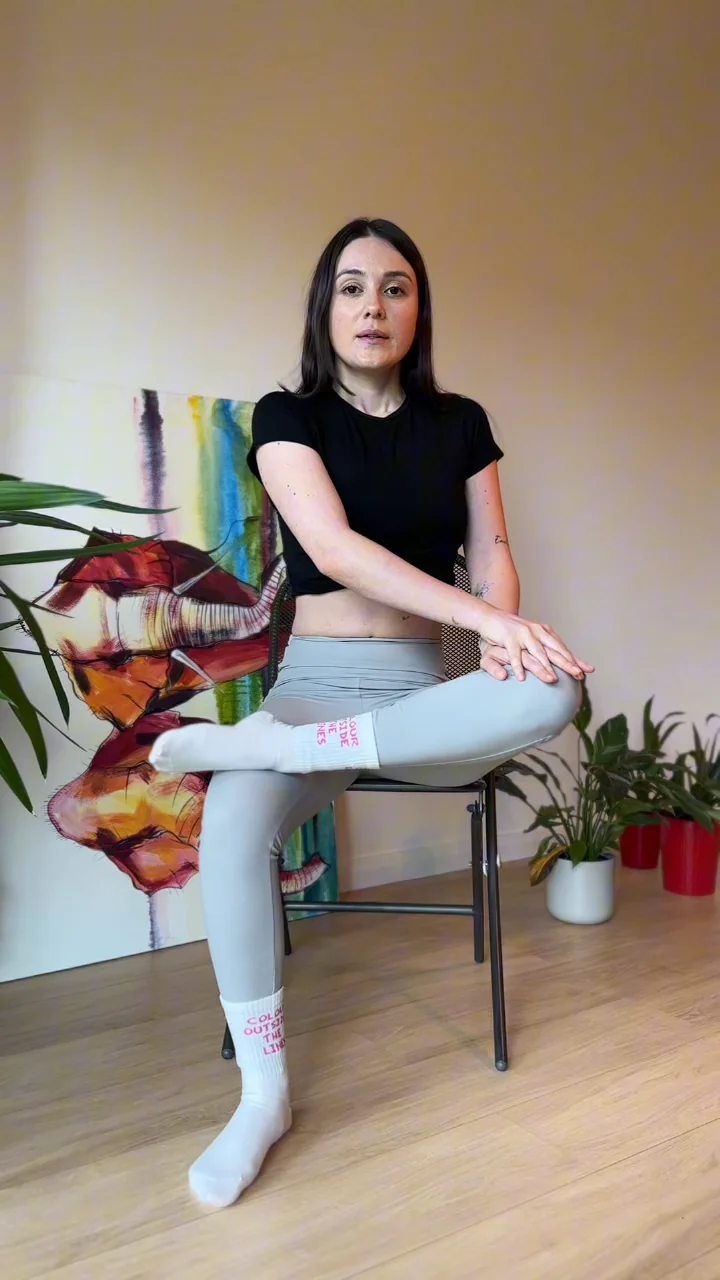
6Seated figure-4 stretch
In the ChairFIT app: Figure 4 Stretch
Hold 20 to 30 seconds each side
Stretches the outer hip and buttock, which often feel tight after long periods of sitting.
Sit tall with both feet flat.
Lift your right foot and rest the ankle on your left knee, so your legs make a figure 4.
Rest your hands on your shin and let the right knee relax down.
For more stretch, hinge forward a little from the hips with a straight back. Switch sides.
Easier: Rest the ankle lower on the shin, or simply cross your legs at the ankles.
Harder: Lean forward a bit further, keeping your back long.
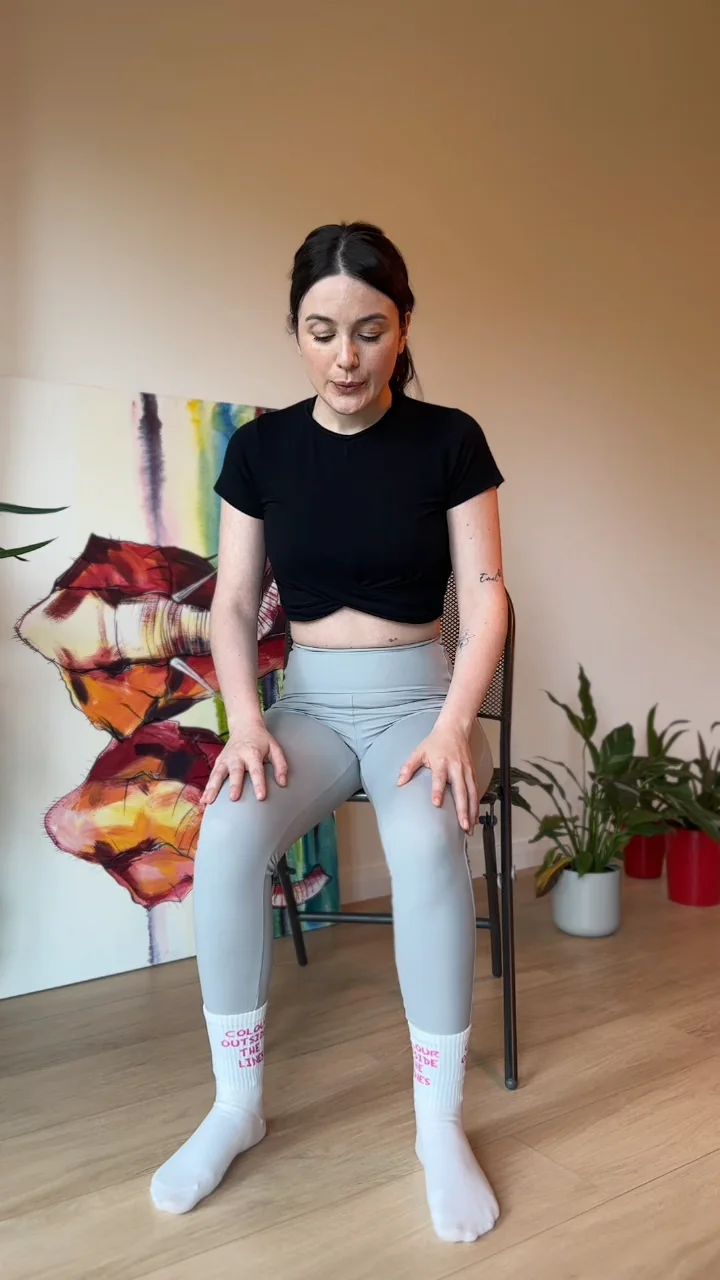
7Seated forward bend
In the ChairFIT app: Forward Bend
Hold 3 to 5 breaths, 2 rounds
Gently stretches the whole back and the backs of the legs while you rest.
Sit with your feet hip-width apart and your hands on your thighs.
Breathe out and slowly fold forward from the hips, sliding your hands down your legs.
Let your head and arms hang heavy. Breathe slowly.
To come up, put your hands on your thighs and roll up one section of your back at a time.
Easier: Fold only halfway with your forearms resting on your thighs.
Harder: Let your hands rest on the floor beside your feet.
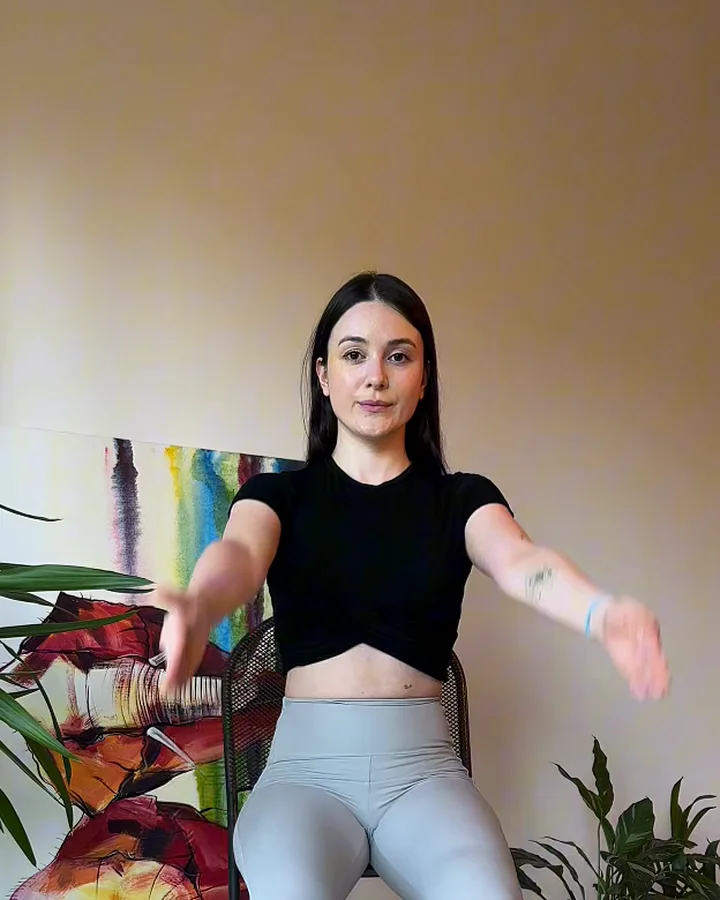
8Forward arm raise
In the ChairFIT app: Front Raise
5 slow breaths, then rest
Works the front of the shoulders, the muscles you use to lift a kettle or reach a cupboard.
Sit tall with your arms resting by your sides, palms facing in.
Keeping your arms long, raise them in front of you up to shoulder height.
If your shoulders feel good, keep going until your hands point up and slightly forward.
Lower slowly while you count to three.
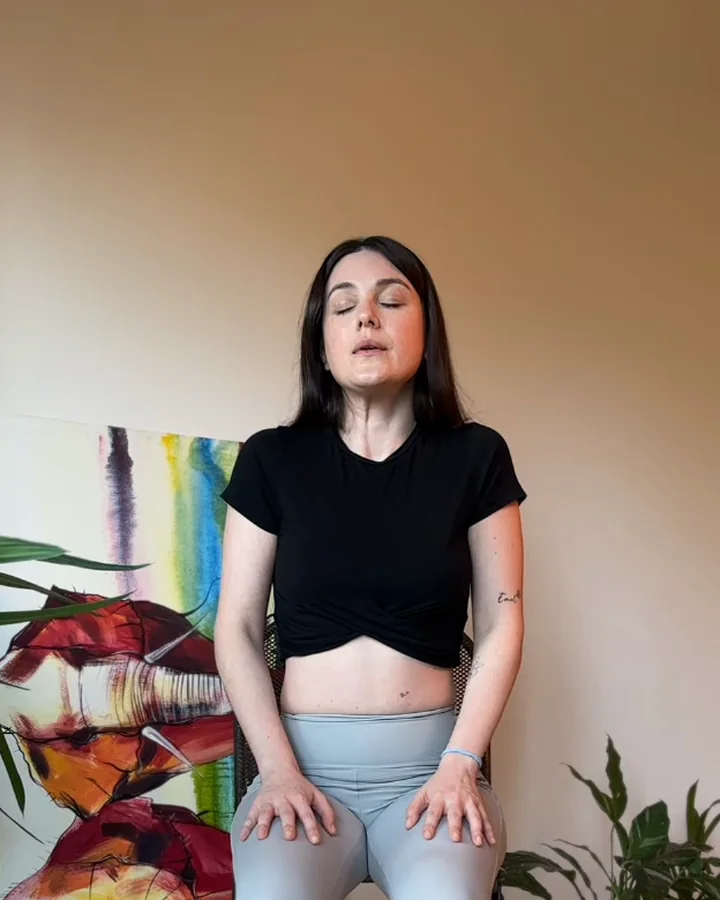
To finish, use this move as a breathing pose: breathe in as your arms float up, breathe out as they lower. Then rest your hands on your thighs and take 3 quiet breaths with your eyes closed.
Easier: Stop at shoulder height, or raise one arm at a time.
Harder: Hold a small water bottle in each hand and pause for two seconds at the top.
The 12-minute sequence
Do the poses in this order. Take a couple of easy breaths between each one.
Both are seated and both are gentle. The difference is the goal.
Chair yoga focuses on stretching, mobility and breathing. Good for stiffness and winding down.
Chair exercises focus on strength and stamina with reps. Good for legs, arms and everyday tasks like standing up and carrying.
The NHS recommends that older adults do activities that improve strength, balance and flexibility on at
least 2 days a week, so a mix of the two works well. If you like paper, the
free printable chair exercise sheet covers the
strength side.
Honest limits and safety
The NCCIH notes that serious yoga injuries are rare, but that older adults may need to be particularly
cautious, and that people with certain conditions may need to avoid or change some poses. Those
conditions include knee or hip injuries, lumbar spine disease, severe high blood pressure, balance
problems and glaucoma.
Talk to your doctor first if any of those apply to you, or if you have osteoporosis or have had recent surgery. Forward folds and twists are the poses most often adjusted.
Go to the edge of the stretch, not past it. You should feel a gentle pull, never sharp pain, tingling or numbness.
Come up slowly from the forward bend to avoid feeling light-headed.
Do not use yoga to delay care. If something hurts or worries you, see a professional.
Sources
We link only to pages we have read. Guidance can change, so check the latest version.
NCCIH (U.S. National Institutes of Health): Yoga: Effectiveness and Safety. Safety notes on yoga for older adults and people with health conditions
For many older adults it is a comfortable way to stretch, move the spine and practise slow breathing without getting down on the floor. It is not risk free: the U.S. National Center for Complementary and Integrative Health notes that older adults may need to be particularly cautious with yoga and should discuss their needs with their health care provider. Seated poses with small, slow movements are a sensible place to start.
How long should a chair yoga session be for a beginner?
Ten to fifteen minutes is plenty to begin with. The sequence on this page takes about 12 minutes. A short session you repeat most days does more for you than a long one you only manage once.
Can I do chair yoga every day?
Yes, gentle seated stretching like this can be done daily if it feels good. If you are also doing strength exercises, a simple pattern is chair yoga on most days and strength moves on two or three of them.
Do I need a yoga mat or special clothes?
No. You need a sturdy chair without wheels, clothes you can move in, and a bit of space to reach your arms out. Bare feet or flat shoes with grip are best.
Can chair yoga help with back pain or arthritis?
Some people find gentle movement eases stiffness, but chair yoga is not a treatment and the right poses depend on your condition. Talk to your doctor or physiotherapist first, skip any pose that causes sharp pain, and do not use yoga as a reason to put off seeing a professional about a problem.
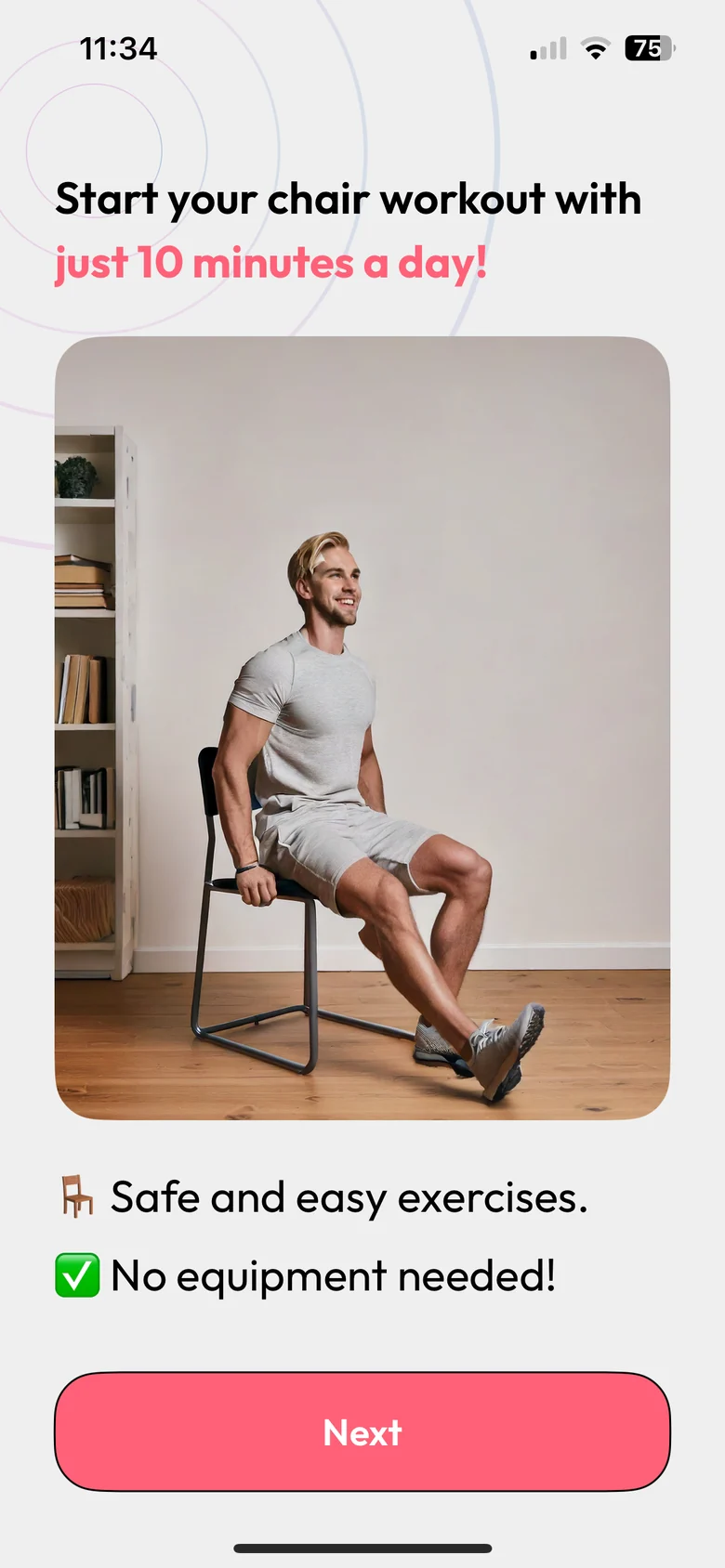
ChairFIT is a 30-day seated chair workout program for iPhone. Each day is about 10 minutes of follow-along
video with a voiceover coach, built for seniors and beginners. You only need a sturdy chair.